Keeping good records
What will you do?
Basic Assessment: The importance of record-keeping
It is near impossible to remember the status and life-history of a colony.
There are several approaches:
Keep it simple and go into detail as soon as you spot a problem. Check for eggs, brood, space, and stores.
Go detailed all the time. Otherwise, you won’t find it easy to interpret when things go wrong. For example, rather than recording BIAS (brood in all stages — which is in common usage), estimating the number of brood frames shows the colony's growth and vigour and gives some sense of whether they are planning to swarm. Below are my notes for a badly behaved colony.
Do it when necessary: For example, after you’ve split your colonies, both parts can be left alone for four weeks. Unless it is early in the year they rarely fail to re-queen themselves.
Find your preferred way of making records
Paper: blows away, gets soggy, and munched by mice.
Tablet computer: it is slow (wrap it in cling film to protect it from propolis)
Paper/card records and subsequently transfer them to a spreadsheet at home.
Dictate: The headset falls off, the recorder/phone gets sticky, and the buttons are too small.
The quality of notes depends on whether they are recorded using a template
Detailed records

H / Hive or Nuc position, TB - top / bottom box, e - eggs, QCo - open QC, QCc - closed QC, B - brood boox, S - super, r/v - review date, Stores, feed, malady - varroa treatments etc, Tepr - temperment 0 - 10 (subjective), clime - weather, Spc - space
This record shows what happens if a colony attempts to swarm and then imperfectly supersedes. The template is so detailed that it is difficult to discern a pattern. Persevere and it will make sense. By the end of August, the colony had a satisfactory amount of brood, enough to over-winter.
Loose leaf records

The critical things to record (besides eggs, space, and stores) are the details of manipulations and aberrations, their temperament, varroa status, and whether the queen is marked.
Waterproof cards
These cards that can be left under the hive roof. They are a happy compromise between disorder and obsession.

Hive Identifiers
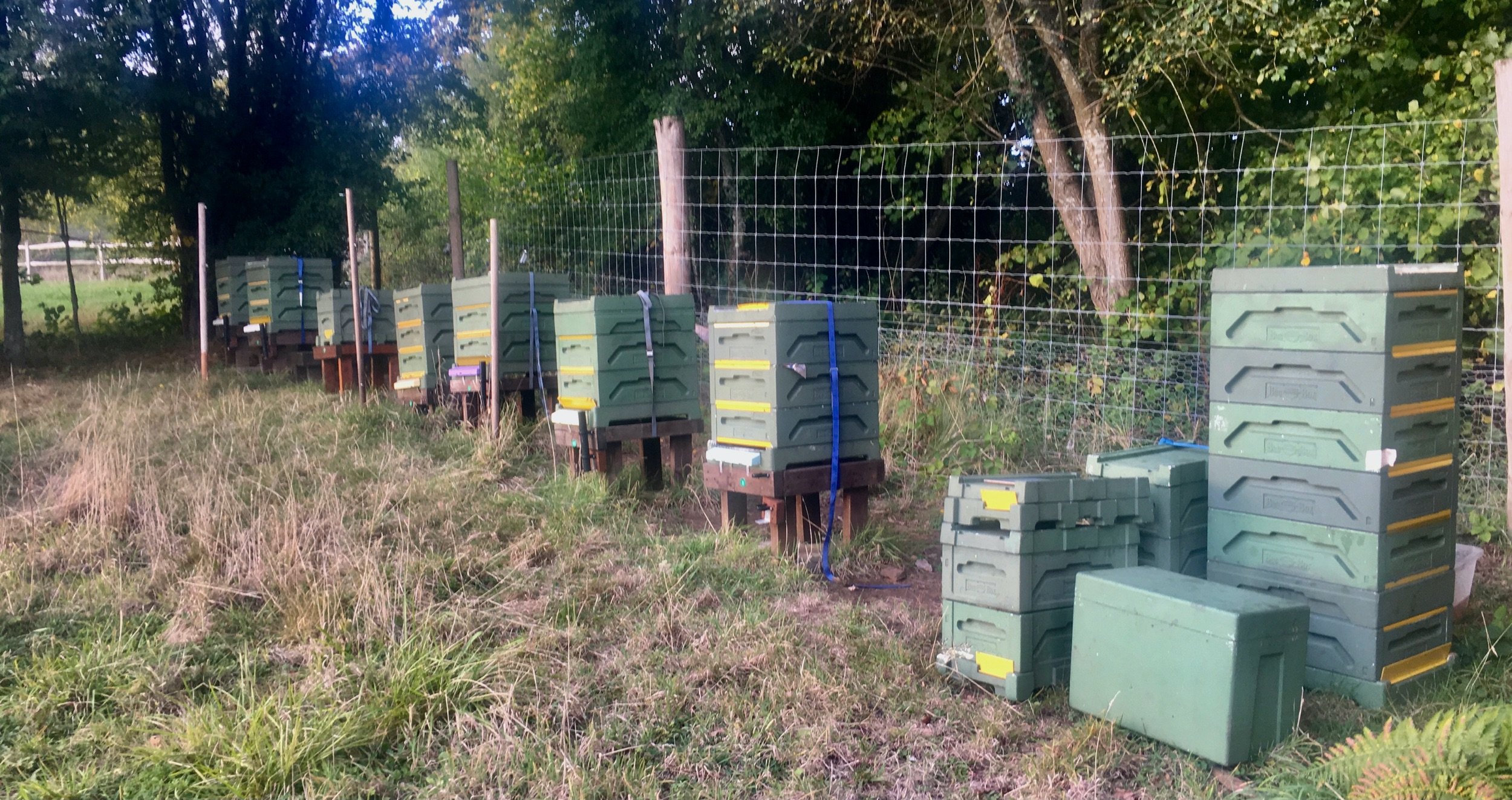
If you have a few hives numbering them is handy. Some people use the number tag to designate each queen so that they can track her if she moves hives. I mark them according to their position.
Records helps decide which queens to use for breeding.
For example, award points (0-10) that define their docility, (although some behaviours, like following, need weighting).
bees leave the hive when it is opened
one flies around your head,
defensive bees line up in cracks
Restless on the comb
Fly up when your hand passes over the box
An unprovoked sting
Several unprovoked stings
Multiple fly against your visor and attempt to force their way into your suit
Follow within 2 meters
Follow more than 2 meters
